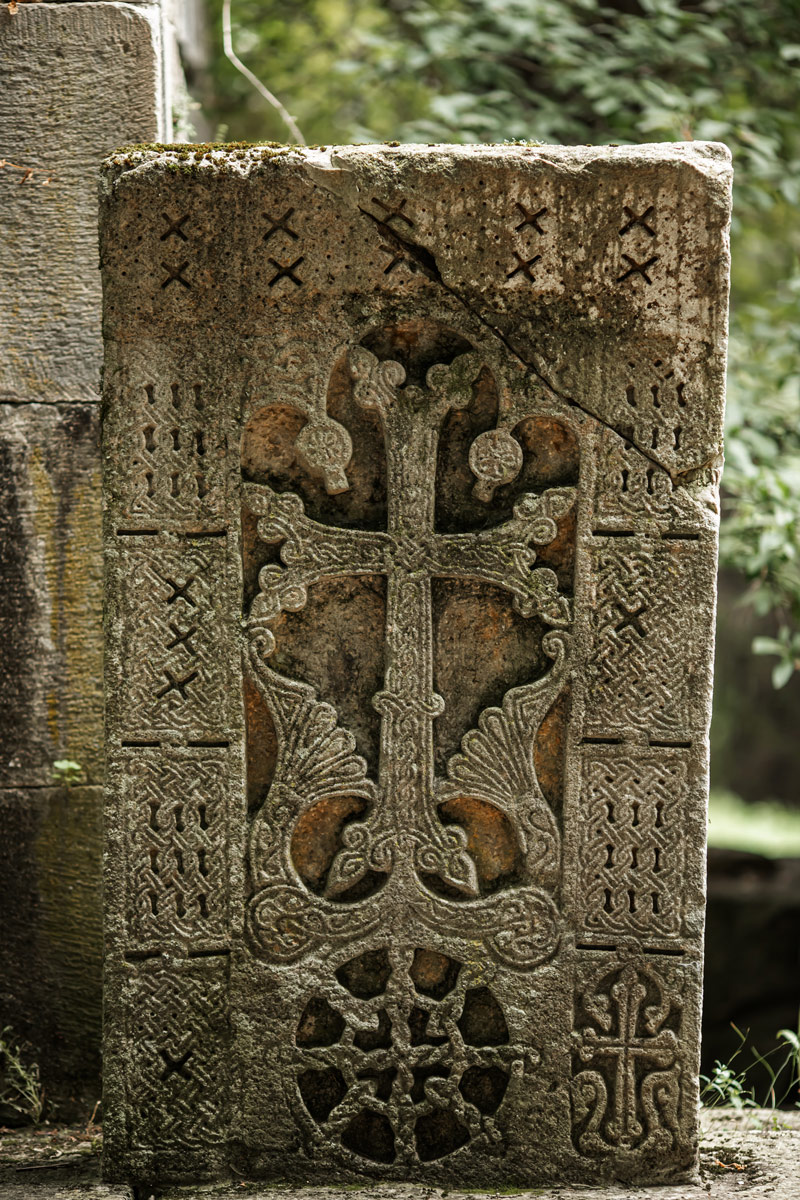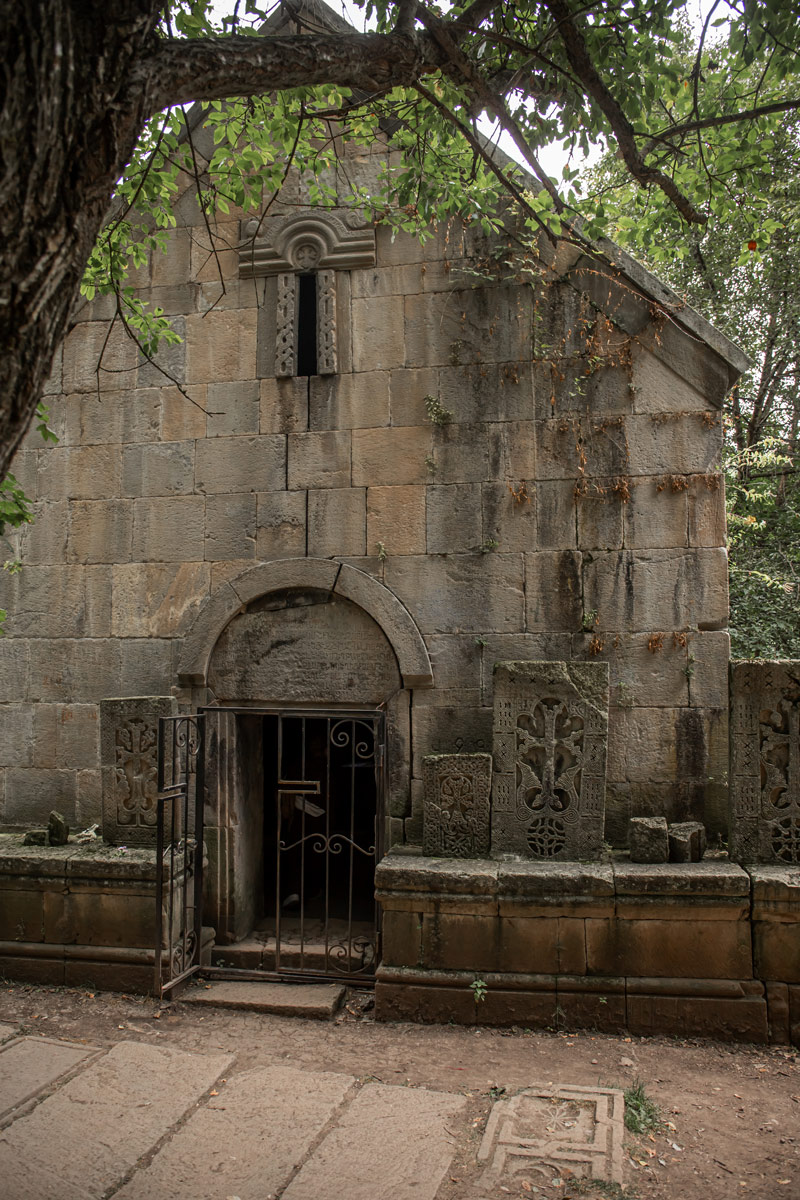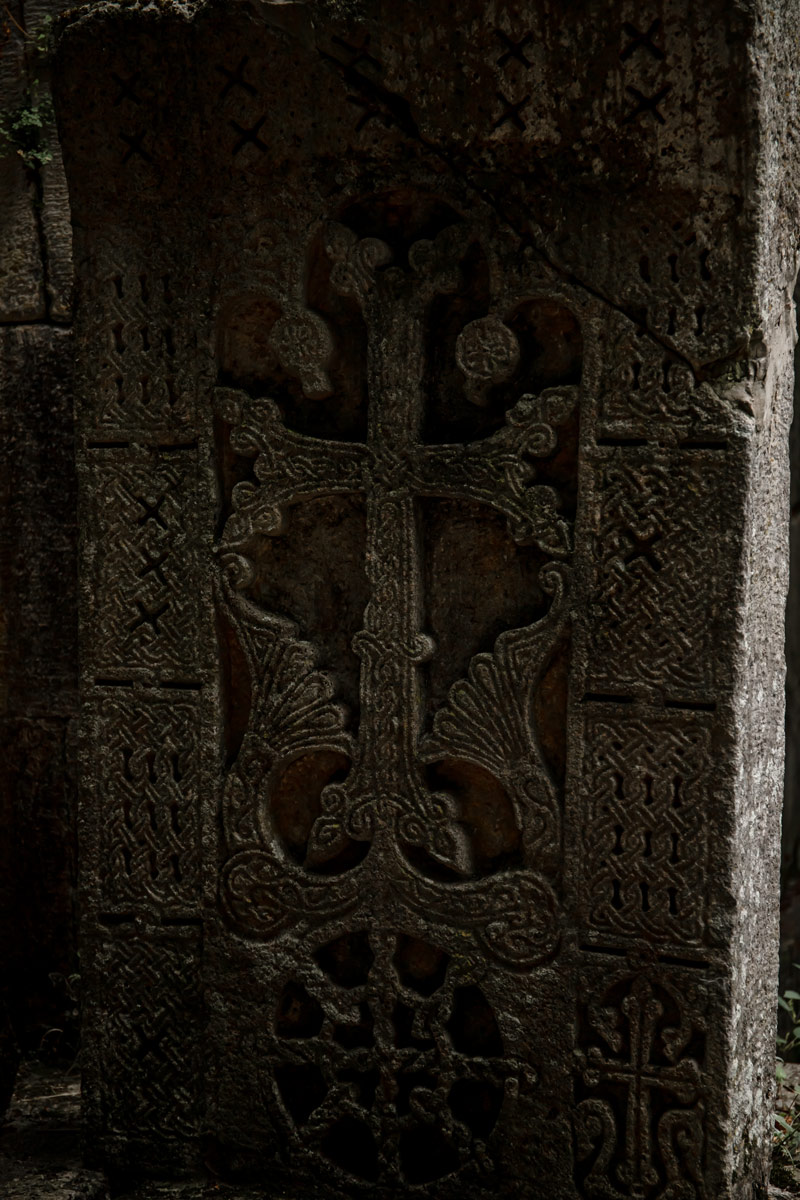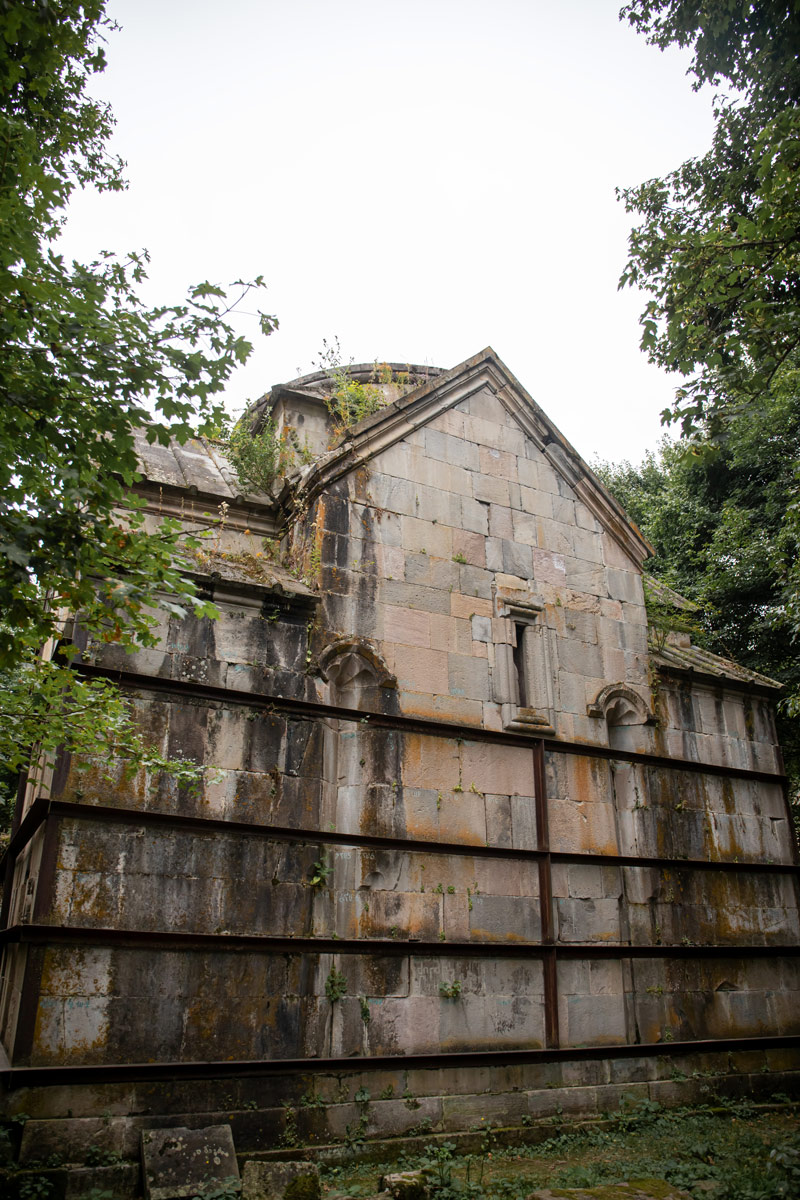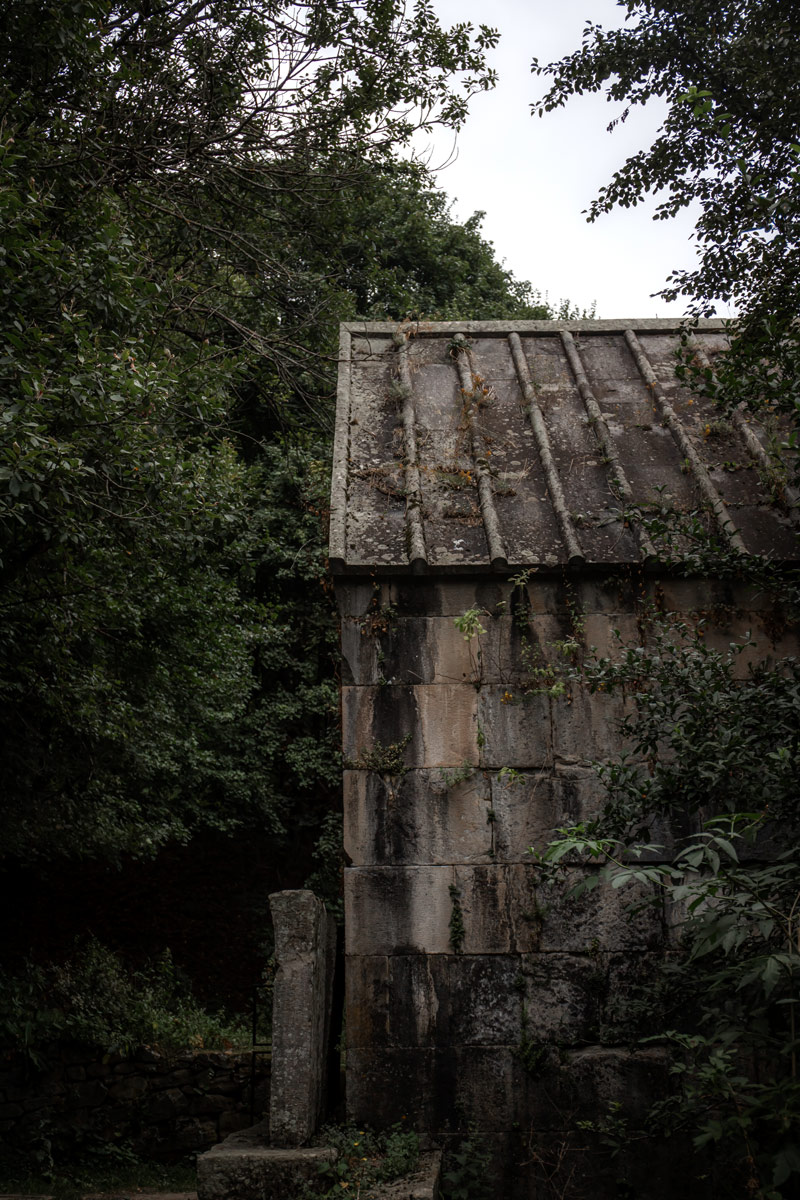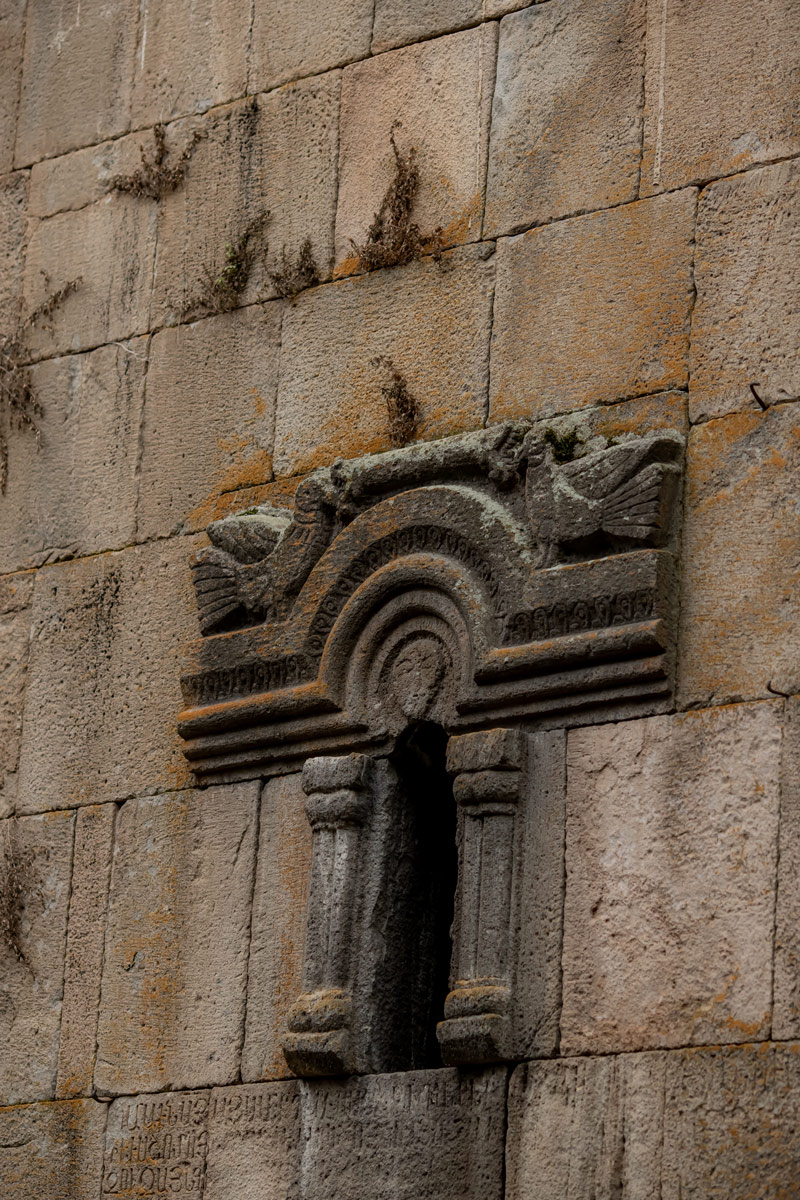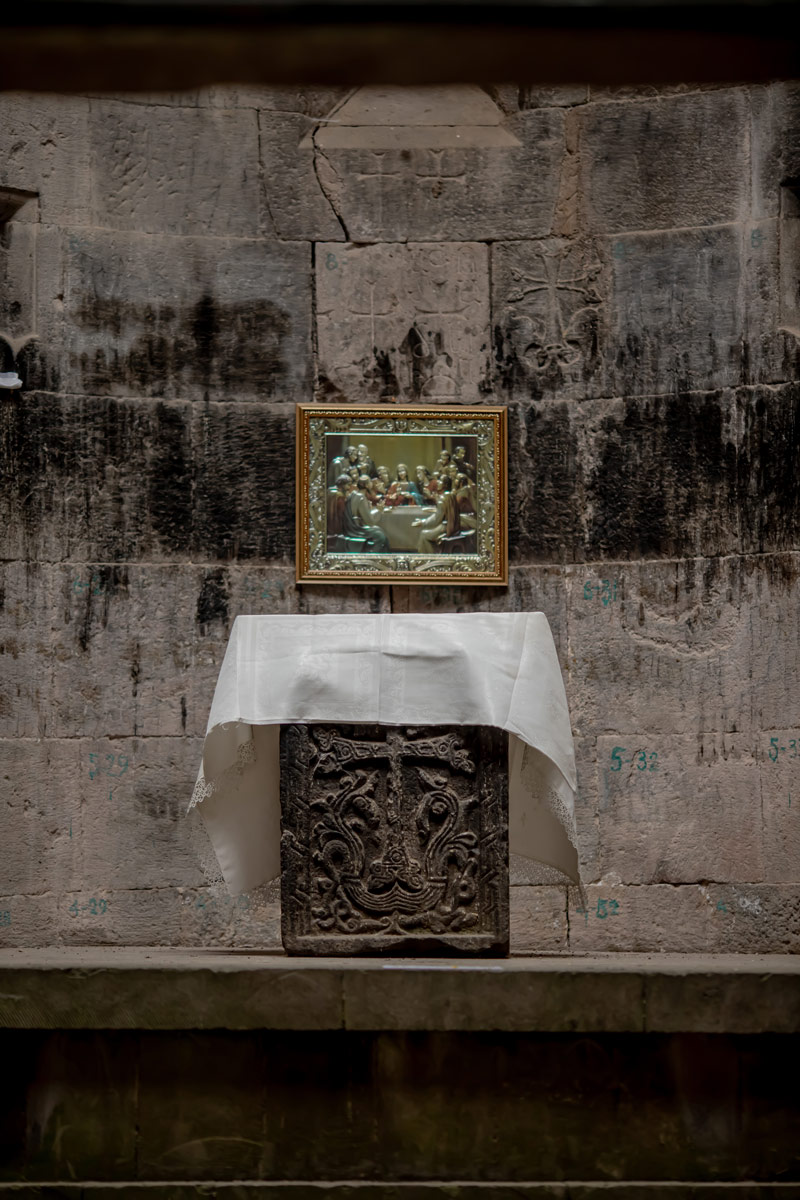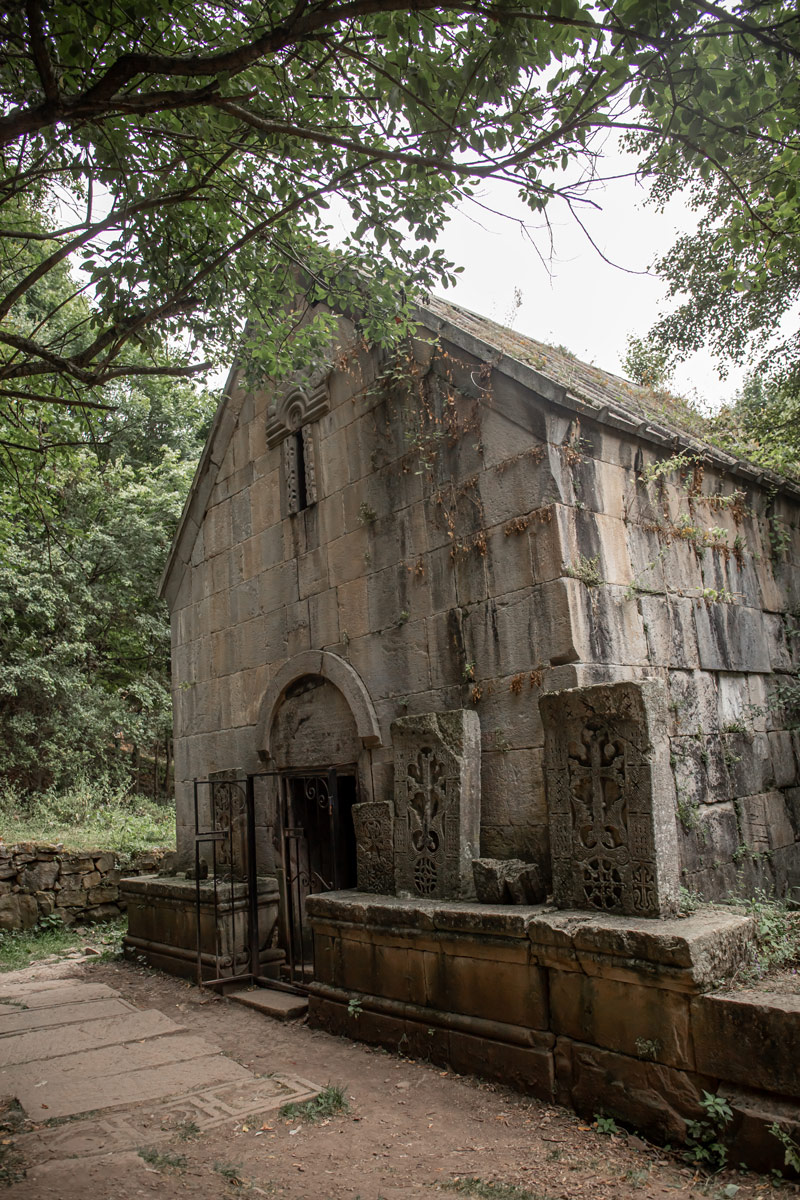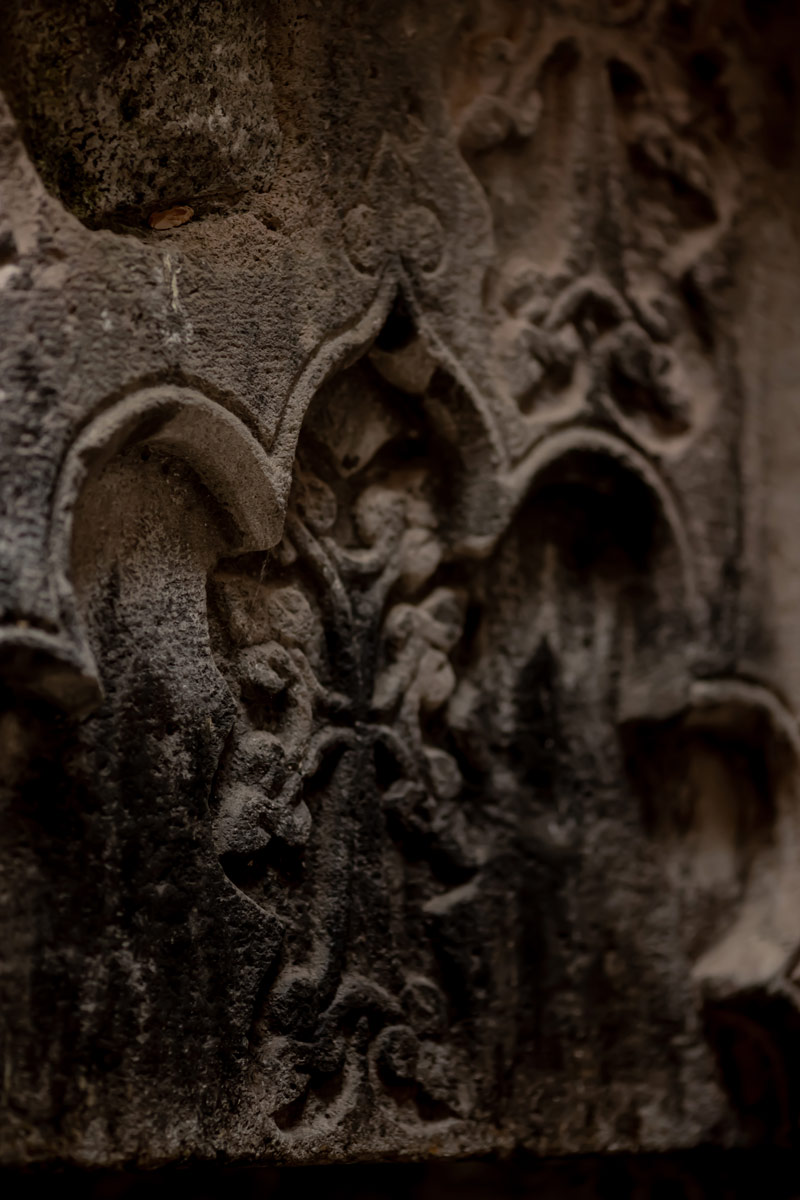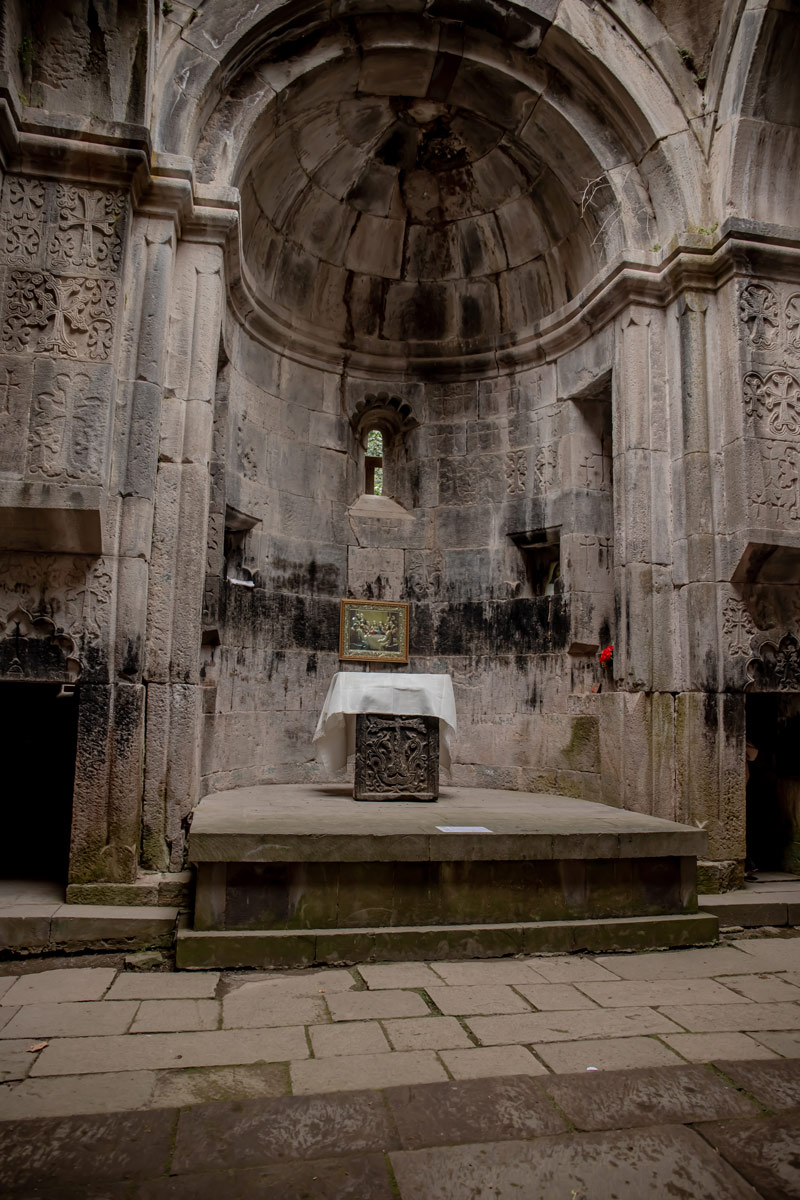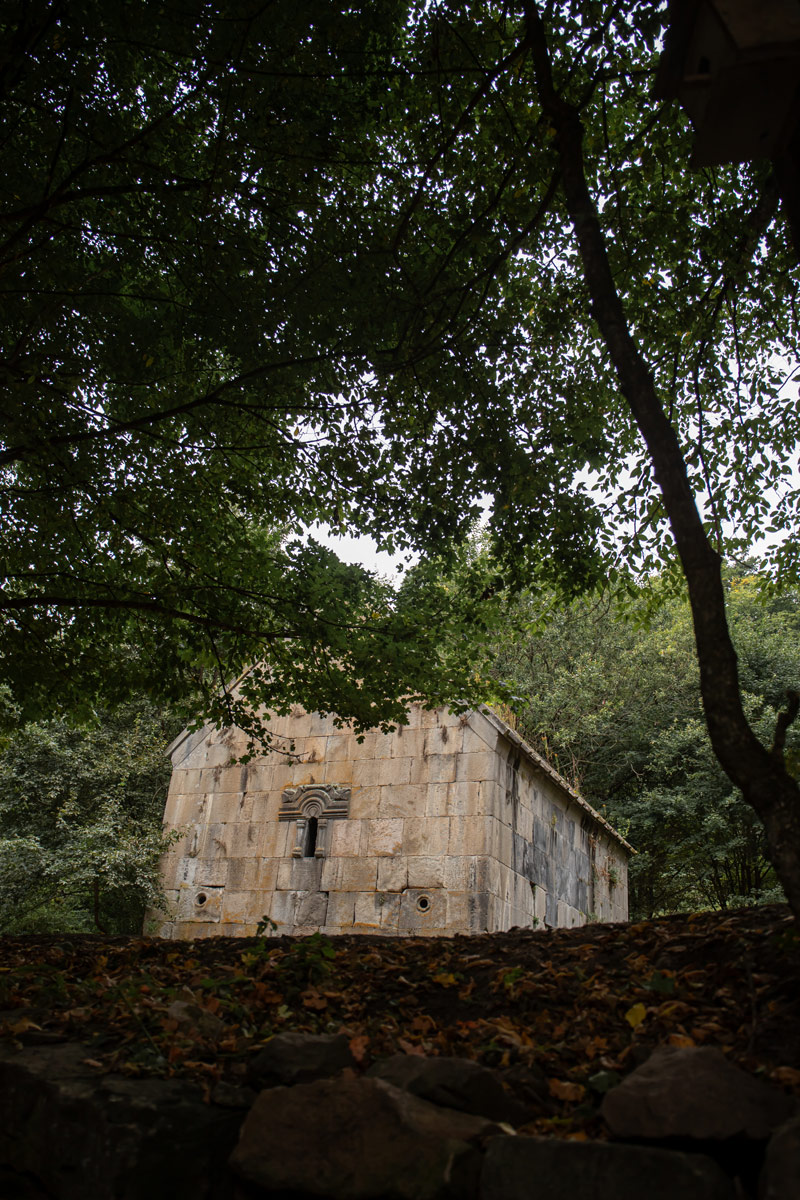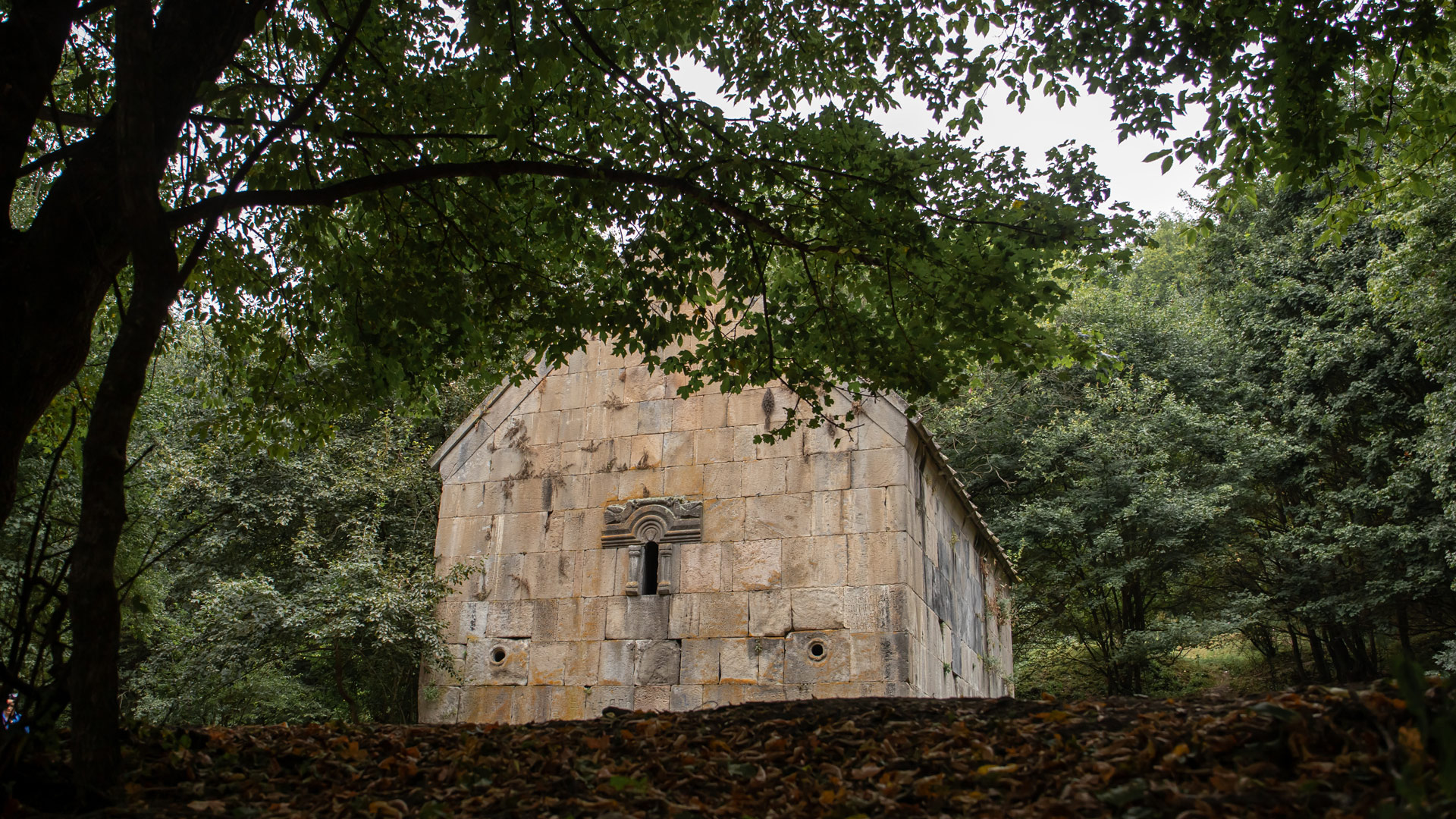
Jukhtak Monastery is located 3 km northeast of the city of Dilijan in the Tavush region. It consists of two separate churches, built of polished felsite stones, St. Astvatsatsin and St. Grigor (hence the popular name "Jukhtak"). The inscriptions carved on the walls of the churches also mention the names Petros Vank and Gisheravank. St. Astvatsatsin Church - was built by the efforts of the abbot Hayrapet in 1201. The builder was the master stonemason Sargis. It is a single-nave basilica-type building with a vaulted, gabled roof, and a quadrangular plan. There are narrow vestries on both sides of the semicircular altar. There are delicately carved khachkars on both sides of the entrance. The construction inscription is carved on the entrance door of the church. There are also several donation inscriptions on the walls. St. St. Gregory Church - a central-domed structure located 20 m east of the St. Astvatsatsin Church. The two-story vestries on both sides of the semicircular main altar are decorated with intricate carvings. From the inscription of the benefactor at the western entrance of the church, it can be assumed that it was built earlier than the St. Astvatsatsin Church. In 1973-1977, the churches of the Ju Khtak monastery were renovated, the surroundings were improved, and in the 1980s, fortification works were carried out. There are cemeteries around the monastery, and in the southern part, on the right side of the stream, there is the Matos village site. The ruins of the latter have preserved the 1247 Matosavank church, a 1251 cross and a cemetery.